W-9 for LLCThe number follows the same person
A single-member company that has its own EIN still leaves that EIN off the form while the company remains disregarded.
Ask about the number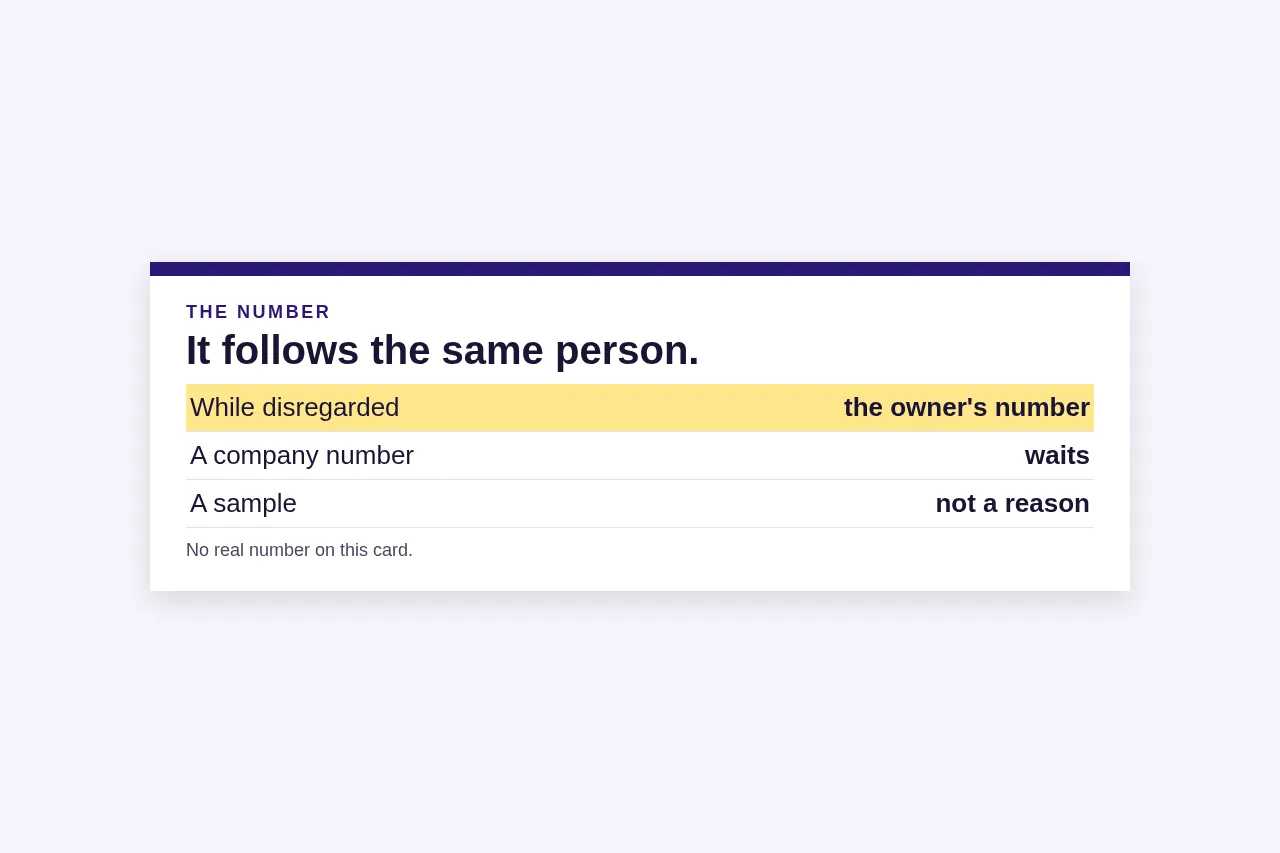
Which number the instructions want.
The draft instructions want the owner's social security number or the owner's own EIN while the company is disregarded. The company's EIN waits until the company is taxed as a partnership or a corporation. Having applied for a number does not change that. The EIN is useful for the bank and for the state. It is the wrong number on this form until the classification changes.
If a customer already stored the wrong number last spring, the fix is a new form, not a quiet hope that January will sort it out. Payers reuse what they have. A wrong number becomes a wrong information return without anyone feeling malicious.
A number that only the bank uses can sit under the name the return uses, and that hiding is a bad habit. The company's own EIN does not belong on this form while the owner is the one who files. The form carries the number the return uses. The other number stays with the bank and with any state account that asked for it. Two numbers can both be real and only one of them belongs on this paper.
When the company's number finally belongs.
The day the company is a partnership or a corporation for tax, the number on the form changes with the name. Line 1 becomes the entity that files. The EIN that used to be too early is now the right one. Sending the old owner's number after that change is the mirror image of the original mistake.
A chain of disregarded companies stops at the first owner who is not disregarded. If that owner is a person, the person's number is the one. If that owner is a partnership or a corporation, that entity's number is the one. Guessing at the nearest EIN is how sister companies get each other's income.
We keep a one-line note in the books that says which number the form used and why. Next year's close should not depend on someone remembering a phone call. Memory is a bad ledger. The note is a better one.
Numbers and the monthly close.
A bank feed full of transfers between the owner and the company will not tell you which taxpayer owns the income. Someone has to name the transfers. That naming is the close. The form should be boring after the close is honest.
Payroll setup, when there is a wage, uses the company's EIN for the employment accounts even while the form in a vendor's hand still uses the owner's number. Those are different jobs. Mixing them is how a payer and a payroll provider end up disagreeing about who the company is.
Social security numbers, EINs, and filled samples stay off this site. The digits remain in the file you keep. A public page can show the pattern and nothing more.
Which number the payer stored.
Ask the payer what they have on file, or look at last year's information return. The number on that return is the one they believe. Compare it with the return you filed. The gap, if there is one, is the conversation.
You will be talking to the Steven Palmieri practice. Skip the binder. One sentence will do, for example that the company number landed on the form and you doubt it belongs.
If both numbers are right for what they are, and only one of them belongs on this paper, we will say which. If the year of books is the real problem, we will say that too, and we will not pretend a new form repairs a year that never closed.
Which number did they store

You will be talking to the Steven Palmieri practice.