W-9 for LLCA new form is the ordinary fix
People treat a bad form as permanent. A new one is the ordinary repair, and it has a season.
Ask about a replacement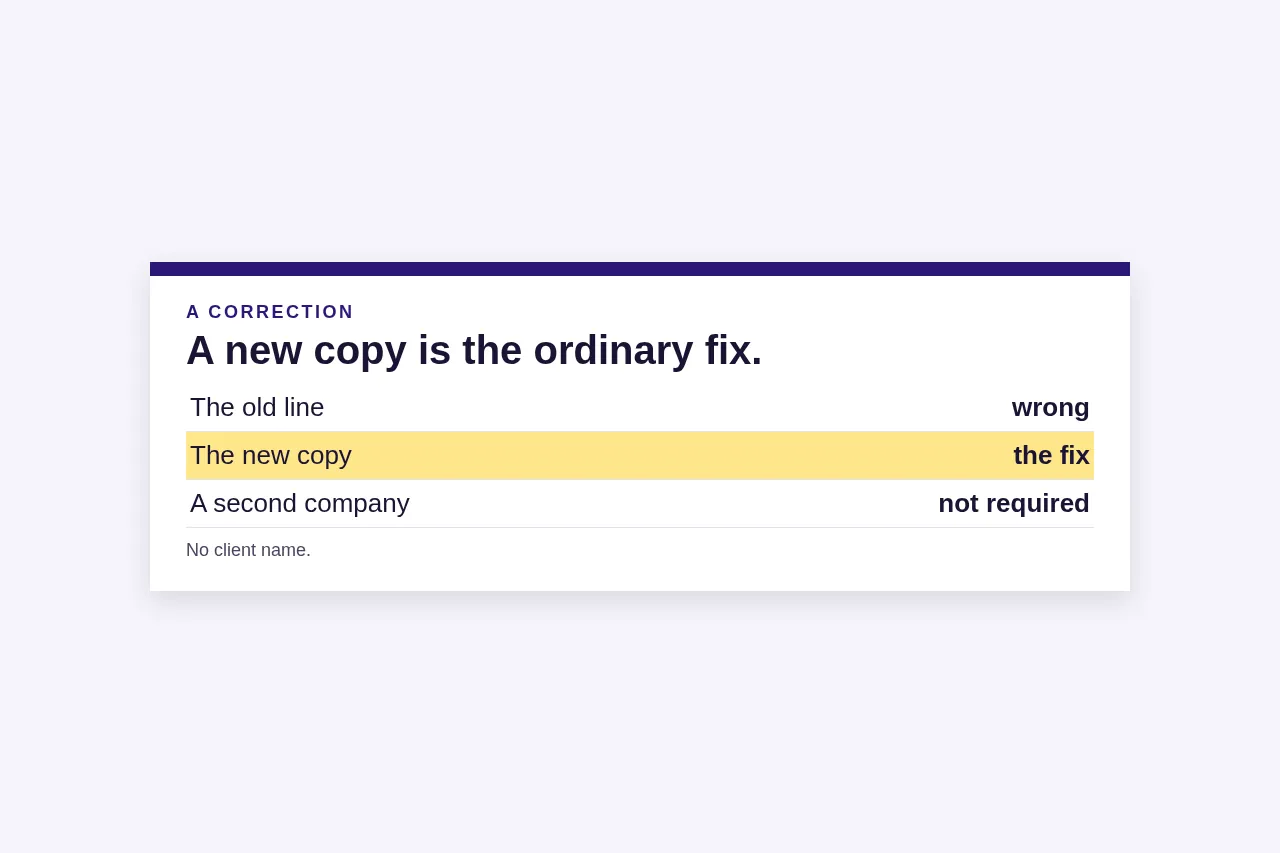
What the new paper changes.
The payer builds information returns from the form they hold. A new form gives them a better one. Tie it to the election papers, not to a blog sample. Send it while the year can still be reported cleanly.
It does not, by itself, amend a return that already named the wrong taxpayer. That correction belongs to the payer who filed. Your new form is the evidence they need. It is not the amended information return.
A payer keeps last year's form with the stubbornness of a folder that never gets cleaned. The old PDF stays in their file until a new one is put in their hand. We are not in their office, and we do not call them. You send the new paper, they replace the old one, and January builds the information return from whichever sheet they still have.
The January date and the payments that do not belong on it.
Form 1099-NEC is due to the recipient and to the IRS on 31 January. A form that arrives on 2 February is a story about last year, not a fix for it. October is a kinder month for this errand than the last week of January.
Payments by card, or through a processor, are reported by the processor. They do not also go on the payer's NEC for the same dollars. Filtering them out is part of getting the year ready. Double reporting is the common error, and it starts with a vendor list nobody cleaned.
Rent, legal, and medical need their own accounts if they need their own boxes. A single professional-fee bucket feels tidy in March and becomes a tangle when the form asks which box. We split the accounts while the year is still open, as part of the close, not as a January emergency.
How the books show the correction.
Write down the date you sent the new form and which vendor got it. The close should be able to show that note. A year from now the question will come back, and the note is cheaper than a reconstruction.
If the wrong number was used on a filed information return, say so early. We will not invent a correction path on a public page. We will say what we see and who has to file what. Sometimes the payer's office already knows the drill. Sometimes they need the new form before they will move.
Personal payments the owner made and then booked through equity can still count as company payments for the information return. The correction is not only the name on the form. It is also the list of what was paid. A beautiful form on top of a missing list is still a bad January.
What we will not pretend.
We will not tell a payer the old form was fine if it was not. We will not backdate a story. The new form is dated when you sign it. The old one remains what you signed then.
Chasing a pile of vendors is its own letter. That work is priced on its own, not discovered later inside an ordinary month. If only one payer has the wrong paper, say which. We would rather repair one file than walk the whole vendor list just to look busy.
You will be talking to the Steven Palmieri practice. The digits at the bottom of the page reach the same people. No timer runs on this page. A replacement already in the payer's file needs no further narration.
Who still holds the old form

You will be talking to the Steven Palmieri practice.